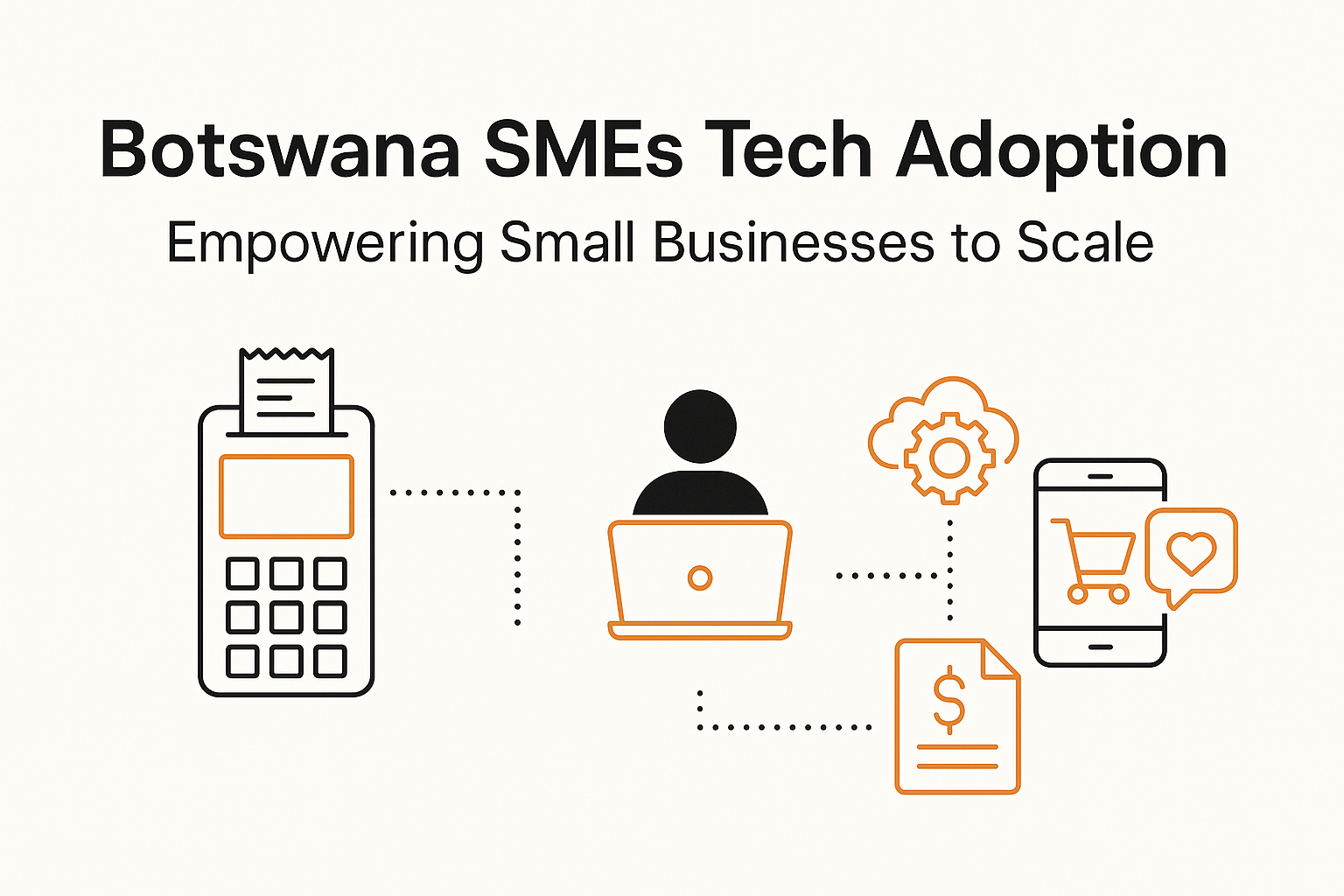
Botswana SMEs Tech Adoption: Empowering Small Businesses to Scale


Botswana SMEs' tech adoption is accelerating as small and medium enterprises realize the value of digital tools in streamlining operations and boosting growth. From point-of-sale systems to cloud accounting software, technology is becoming a vital asset for business survival and success.

With access to affordable mobile data and user-friendly platforms, more entrepreneurs are embracing digital solutions. This shift in Botswana SMEs' tech adoption is helping reduce costs, improve customer service, and increase market reach, especially through social media and e-commerce.

Government and private sector initiatives are also supporting digital training and funding, further fueling Botswana SMEs' tech adoption across industries like retail, agriculture, and services.

As competition rises and consumer expectations evolve, Botswana SMEs tech adoption is no longer optional—it’s a game-changer. By leveraging the right technologies, Botswana’s SMEs are positioning themselves for long-term resilience and regional expansion.


Comments

Popular posts from this blog

Benefit of hiring a offshore Python Developer in 2025

In 2025, the benefit of hiring a offshore Python developer goes beyond just saving costs. With remote collaboration tools now more advanced, offshore developers integrate seamlessly into your team—often working in your time zone and delivering top-tier code. One key benefit of hiring a offshore Python developer is access to a global talent pool. You’re not limited by geography, which means you can find highly skilled experts at a fraction of local hiring costs. Another benefit of hiring a offshore Python developer is faster project turnaround. Offshore teams often work in overlapping shifts, allowing round-the-clock progress and quicker releases. The final benefit of hiring a offshore Python developer lies in scalability. Whether you're launching a startup or expanding a SaaS product, offshore developers offer flexible engagement models that let you scale your dev team up or down with ease. Hiring offshore in 2025 is smart, agile, and future-ready.

What Smart Warehousing Looks Like in Africa in 2025

What Smart Warehousing Looks Like in Africa in 2025 is a story of transformation powered by technology. Gone are the days of manual inventory checks and scattered supply chains. Today, African businesses are embracing automation, IoT sensors, and AI-driven systems to track goods in real time, improve accuracy, and reduce costs. At the heart of what smart warehousing looks like in Africa in 2025 is connectivity. Warehouses now use cloud-based platforms that sync data across locations—rural or urban—allowing even small businesses to operate at scale and compete with global players. The biggest shift in what smart warehousing looks like in Africa in 2025 is inclusion. From solar-powered storage to mobile-integrated stock tracking, solutions are tailored to Africa’s realities—poor grid access, remote areas, and diverse logistics needs—making smart warehousing accessible to all. What smart warehousing looks like in Africa in 2025 is not just high-tech—it’s high-impact

The African Continental Free Trade Area (AfCFTA)

The African Continental Free Trade Area (AfCFTA) is transforming the future of trade across Africa. Launched in 2021, AfCFTA creates the largest free trade area in the world by connecting 54 countries and over 1.4 billion people. Its main goal is to eliminate tariffs, boost intra-African trade, and make African businesses more competitive on a global scale. By reducing trade barriers, AfCFTA opens new opportunities for small and medium enterprises, farmers, and manufacturers across the continent. It also encourages infrastructure development, digital innovation, and stronger regional value chains. According to the World Bank, AfCFTA could lift 30 million people out of extreme poverty by 2035. However, successful implementation requires strong cooperation between governments, businesses, and communities. Investment in logistics, customs modernization, and technology will be crucial to unlocking AfCFTA’s full potential. With the right strategies, AfCFTA can drive sustainable growth and...